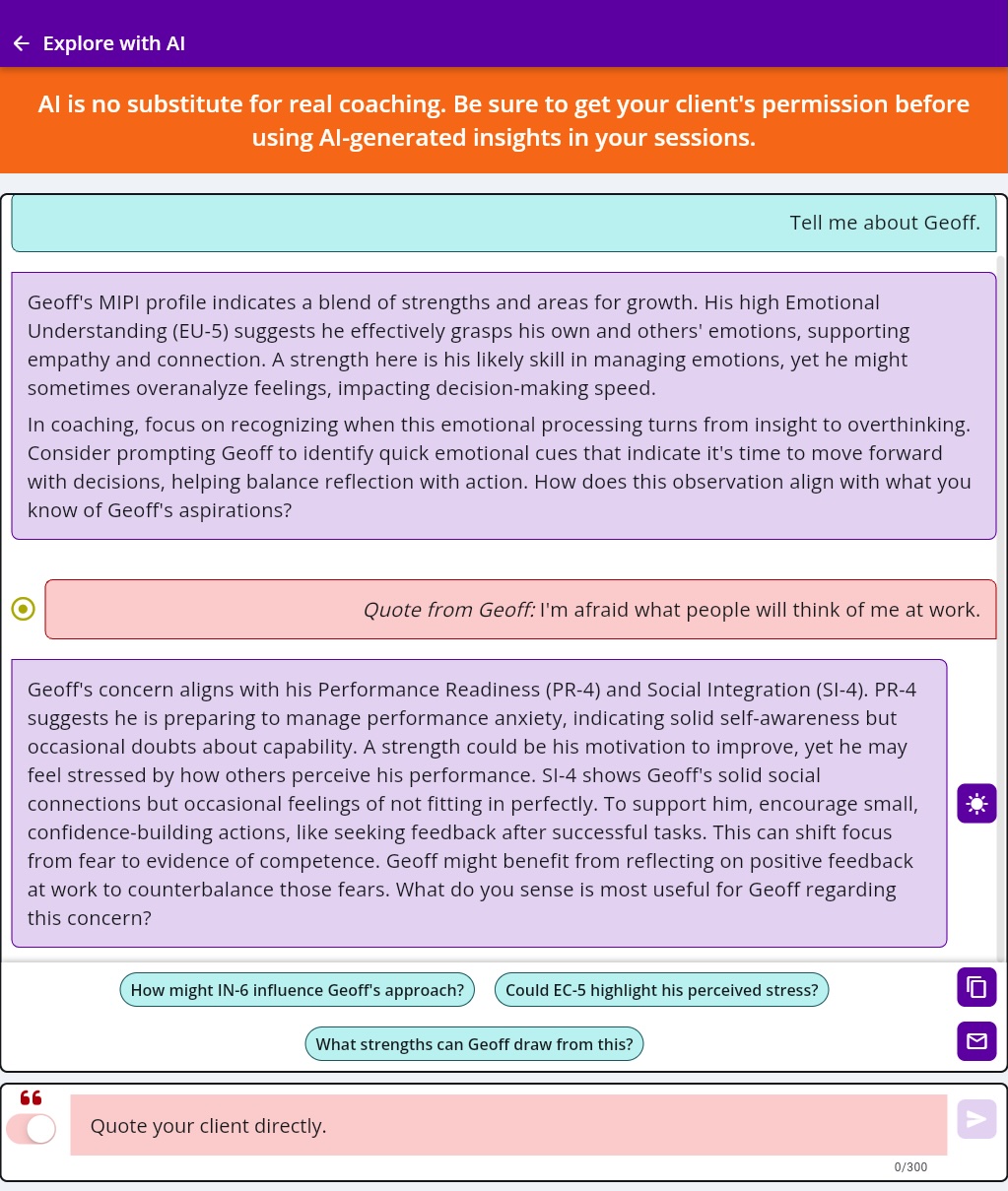
The MIPI Competency Development Framework (2023)
By 2023, the work around the MIPI had moved well beyond assessment design and score interpretation alone. The MIPI Competency Development Framework (CDF) was one of the first large-scale attempts to organize soft-skills development around the model with a much higher degree of structure, calibration, and practical specificity.
At 412 pages, the CDF was not a short interpretive guide. It was an ambitious framework designed to help coaches, trainers, HR professionals, and researchers move from raw competency scores to more targeted developmental programming. At that stage, the key problem had become clear: generic soft-skills training was not good enough. The field remained too scattered, too inconsistent, and too reliant on one-size-fits-all solutions that treated development as though the same lesson could simply be handed to anyone in the same form.
The CDF was an effort to change that.

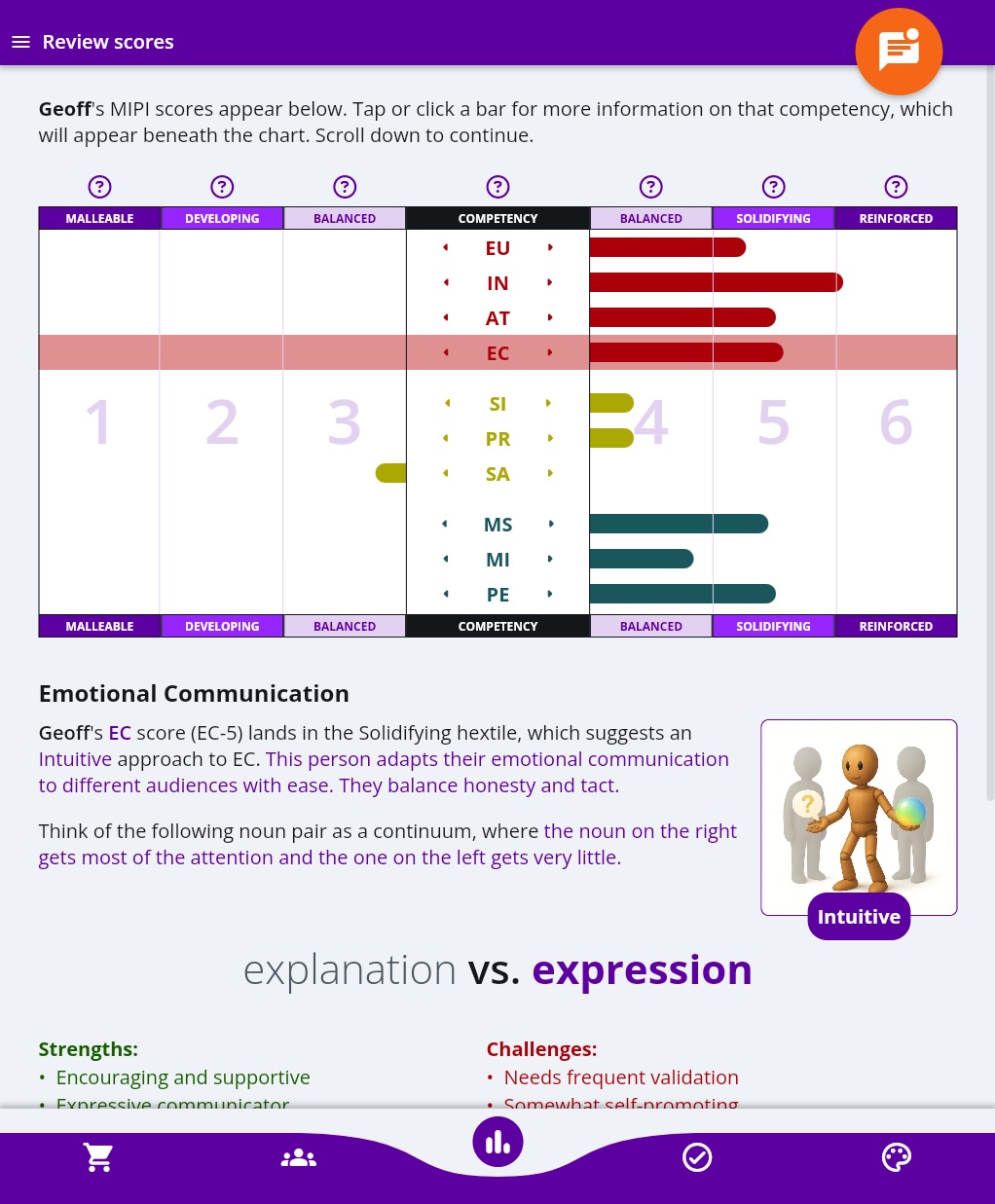
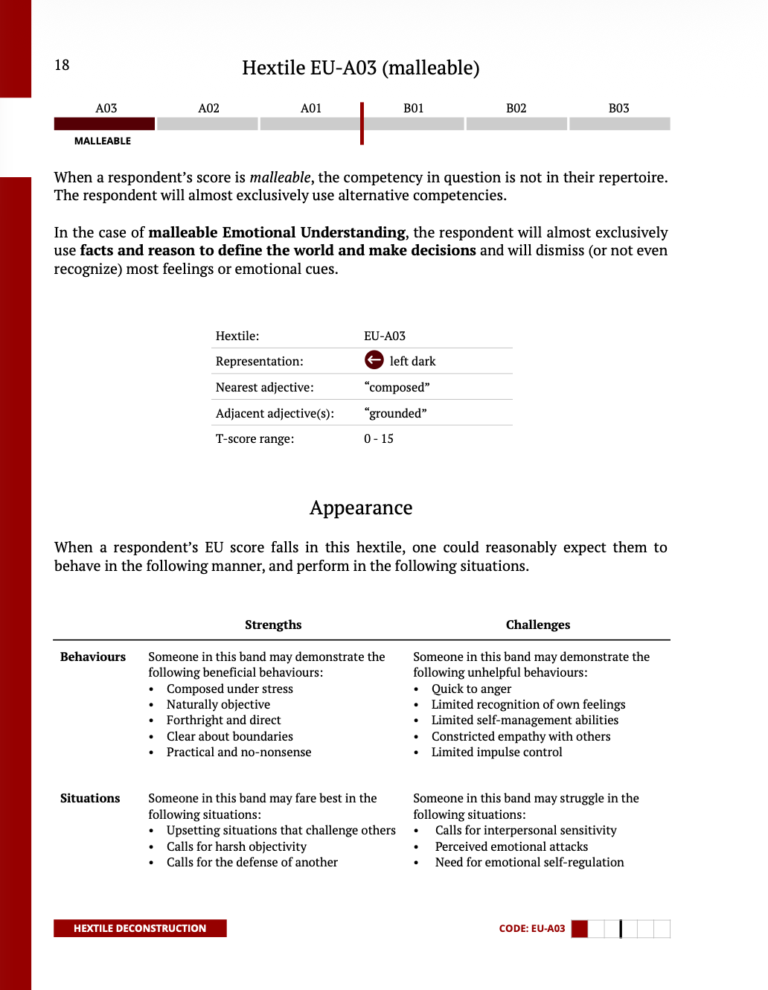
Its central contribution was the introduction of a six-position hextile structure for each MIPI competency. Rather than treating a competency as merely low, moderate, or high, the framework broke each one into a set of more specific developmental positions, each with its own strengths, liabilities, engagement considerations, and programming implications. This allowed the model to begin functioning less like a static report and more like a practical decision system.
That shift mattered. Once the hextile logic was in place, development could be framed with much more nuance. A person on one side of a competency continuum might need something very different from someone on the other, even if both appeared to need “work” in the same broad area. The CDF began making that distinction explicit. It treated score direction, behavioural presentation, and profile-specific challenge as central to programming rather than secondary to it.
The framework also tried to solve a deeper methodological problem. Much of the available soft-skills literature is rich, but disconnected. Relevant material exists across psychology, behavioural science, education, management, healthcare, and other fields, yet rarely arrives in a form that helps someone decide what to teach, when to teach it, and to whom. The CDF was built as a response to that fragmentation. It aimed to create a more coherent architecture for selecting and sequencing developmental work around the MIPI.
In practical terms, that meant the framework did several things at once. It described the competencies in detail. It articulated the logic of the hextiles. It outlined how each competency interacted with others in the profile. It provided targeted activity suggestions connected to different developmental positions. And it began to present soft-skills programming as something that could be mapped with greater discipline rather than improvised from intuition.
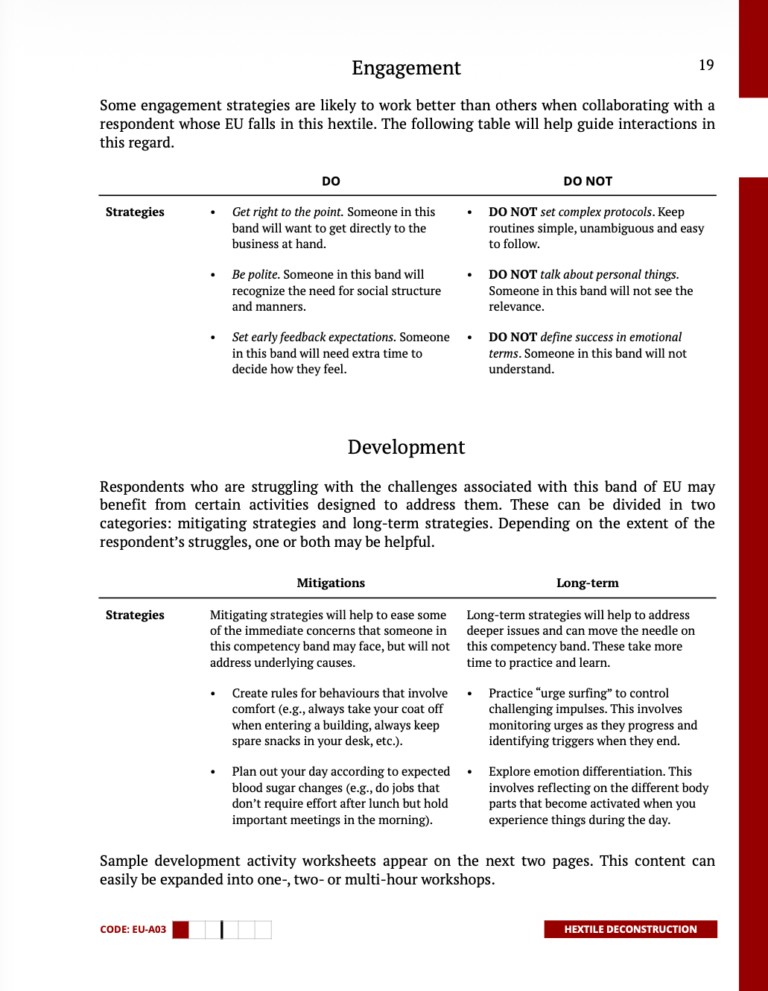

One of the more important markers of that shift was the activity design. The framework positioned itself not only as a descriptive model, but as a programming tool, claiming more than 120 activities coded to specific hextiles. Whether used in coaching, workshops, HR development, or research, the aspiration was clear: to help practitioners choose interventions that actually fit the person in front of them rather than defaulting to generic lessons.
Seen now, the CDF reads as a major transitional artifact.
It is more mature than the earlier coach-facing material that came before it. The calibration logic is sharper. The developmental distinctions are clearer. The ambition is broader. Most importantly, it shows a decisive move away from generic training and toward profile-sensitive development design.
At the same time, it still belongs to an earlier stage of the work. The prose often carries the weight of a framework still trying to explain itself in full. The system is powerful, but not yet as modular, governed, or cleanly separated as it would later become through corpus development. In that sense, the CDF is not the endpoint. It is the stage where the architecture became visible.
That’s why it matters.
The MIPI Competency Development Framework marks the point at which the work began to function as something more than a model, a certification or a coaching instrument. It became a genuine attempt to organize competency development as a structured domain in its own right. For that reason, it belongs in the archive as one of the clearest markers in the path from early interpretation work toward the more disciplined curation and mapping logic that would ultimately lead to the corpus.
Where to next