FOR TEAMS & TRAINING
Bespoke training built around your team, not pulled from a shelf.
Most soft skills training starts with a topic. We start with your people.
Using organizational intake and group MIPI results, we identify the behavioural patterns most likely to affect communication, collaboration, influence and performance in your real context. Then we build a training proposal around what your group actually needs.
Currently available across Ontario
Why generic soft skills training often misses
Most training assumes the problem before it understands the group. That is why well-run sessions can still leave the real bottlenecks untouched. We begin with context, role demands and group MIPI data so the program can target what is most relevant, not just what is most familiar.
OUR PROCESS
From group profile to tailored program
1
Organizational intake
We learn what your team is trying to do, where friction is showing up and what constraints the training needs to respect.
2
MIPI assessment
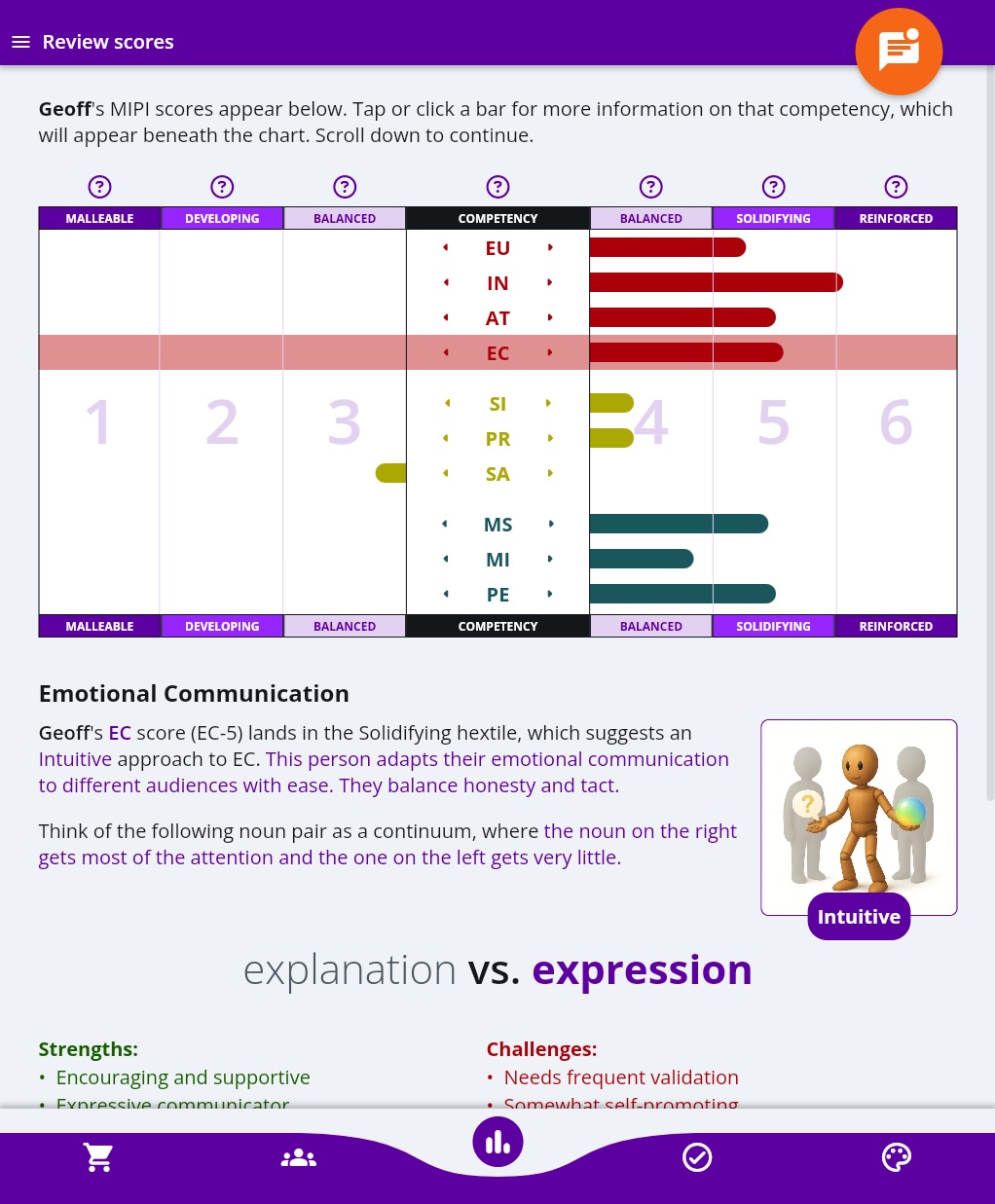
Selected staff complete the MIPI long form so we can identify shared strengths, pressure points, and meaningful variation across the group.
3
Training proposal
We translate the intake and group profile into a tailored proposal that identifies priorities, explains why they matter and recommends a training sequence.
4
Program delivery
Once approved, we deliver the program in the format that best fits your context so each session supports the behaviours that matter most.
CAREFUL TAILORING
What the proposal makes clear
A bespoke proposal does more than recommend topics.
Each proposal is built to clarify:
- the real organizational problem
- the group’s behavioural profile
- the competencies most worth targeting
- the areas that do not need emphasis
- the likely impact of focusing in the right place
- the recommended sequence for development
Your program is shaped around:
- the behavioural patterns in your group profile
- the demands of your actual environment
- the communication culture of the organization
- time, format and scheduling realities
- the kind of reinforcement your team can realistically sustain
This means the curriculum is not generic, but also not improvised.
It is built from structured interpretation, evidence-informed methods and practical delivery design.
INSIDE THE TRAINING
What bespoke materials can look like
Every Adaptimist program includes concrete, facilitator-ready materials that turn insight into behaviour. These examples show the kinds of evidence-based tools that can be selected, adapted, or created inside a bespoke program.
Performance Readiness
Challenge-stress balance practice
A guided activity using the Yerkes-Dodson stress curve to help staff map their own productive “sweet spot” for pressure. Participants identify what underload and overload look like for them, then plan habits to maintain an optimal performance zone.
Social Agency
Reading body language
A visual worksheet illustrating open and closed body language, including posture, arm position and eye contact. Participants practice spotting subtle cues and consider adjustments to make others feel safer and more engaged.
Motivational Influence
Six principles of persuasion
A reflection tool based on Cialdini’s model. Staff answer targeted questions about reciprocity, social proof, authority, liking, consistency and scarcity, then plan how to use these principles transparently and ethically in workplace situations.
These are examples of the kinds of tools that can appear inside a bespoke program. Your actual proposal will specify the competencies, exercises, and sequencing that fit your group’s profile and goals.
Ready to see what your team actually needs?
Start with a briefing. We will learn about your context, walk through the process, and show you what a bespoke training pathway could look like for your group.