Emotional Communication
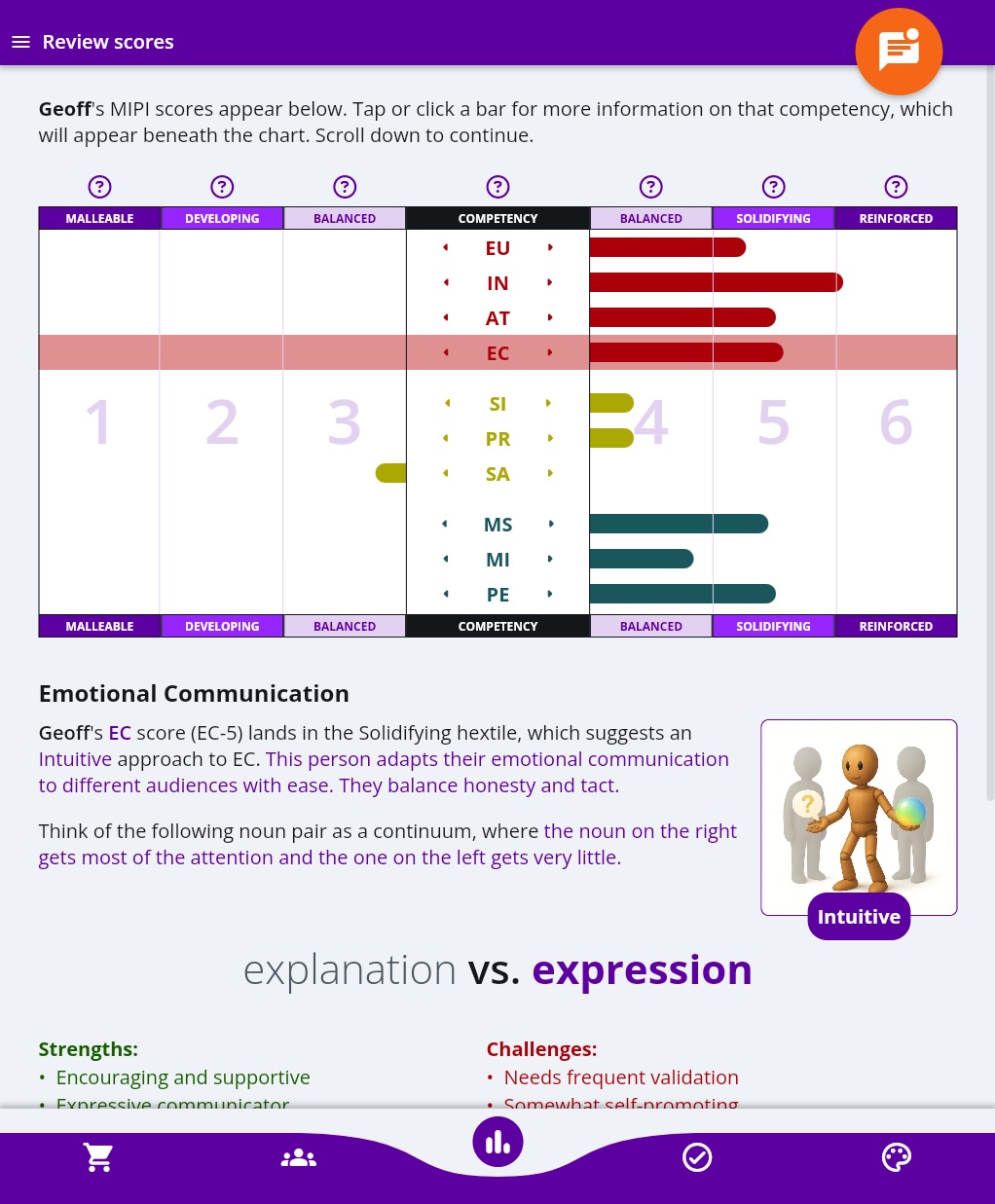
Emotional Communication is the capacity to put internal states into words and communicate them clearly enough for another person to understand.
In ordinary language, it is about how usable your emotional expression is to other people. Some people communicate feeling with clarity and fit. Others express more sparingly, indirectly or with less precision, even when the feeling itself is real.
Continuum
Lighter emotional articulation
Emotion may be expressed sparingly, indirectly or with limited precision, even when it is strongly felt.
Strengths
- supports privacy and containment
- can keep communication brief
- may reduce emotional overload in dialogue
Challenges
- others may have to guess too much
- stakes can stay under-described
- repair may become harder to start
High emotional articulation
Emotion may be put into words readily, with strong nuance, detail and interpersonal clarity.
Strengths
- supports clearer mutual understanding
- helps name emotional stakes precisely
- can improve repair and coordination
Challenges
- communication can become too heavy
- detail may exceed what context needs
- fluency can outrun accuracy
The point of the continuum is not that one end is better. Each position carries trade-offs, and those trade-offs matter differently depending on context.
What It Shapes
- how clearly feelings become communicable
- how much detail you bring into disclosure
- how usable your emotional expression is to others
In Everyday Life
Emotional Communication affects whether other people can understand what you are feeling without doing too much interpretive work.
When it is more available, a person may be better able to name feelings, explain their significance and communicate them with enough fit to support closeness, repair or coordination.
When it is less available, emotion may remain private, vaguely signaled or only partly translated into words. The feeling is still there. It is just harder for other people to track clearly.
What It Is Not
Emotional Communication is not the same as Emotional Understanding.
Someone can understand their feelings quite well and still communicate them briefly or selectively. Someone else can speak fluently about emotion while still misreading what they are actually feeling.
Why It Matters
This competency helps describe how well internal experience becomes shareable, not simply how much a person talks about feelings.
It is useful because it makes differences in expression, calibration and communicative fit legible without treating restraint or fluency as automatically better.
Where to next