Hextile
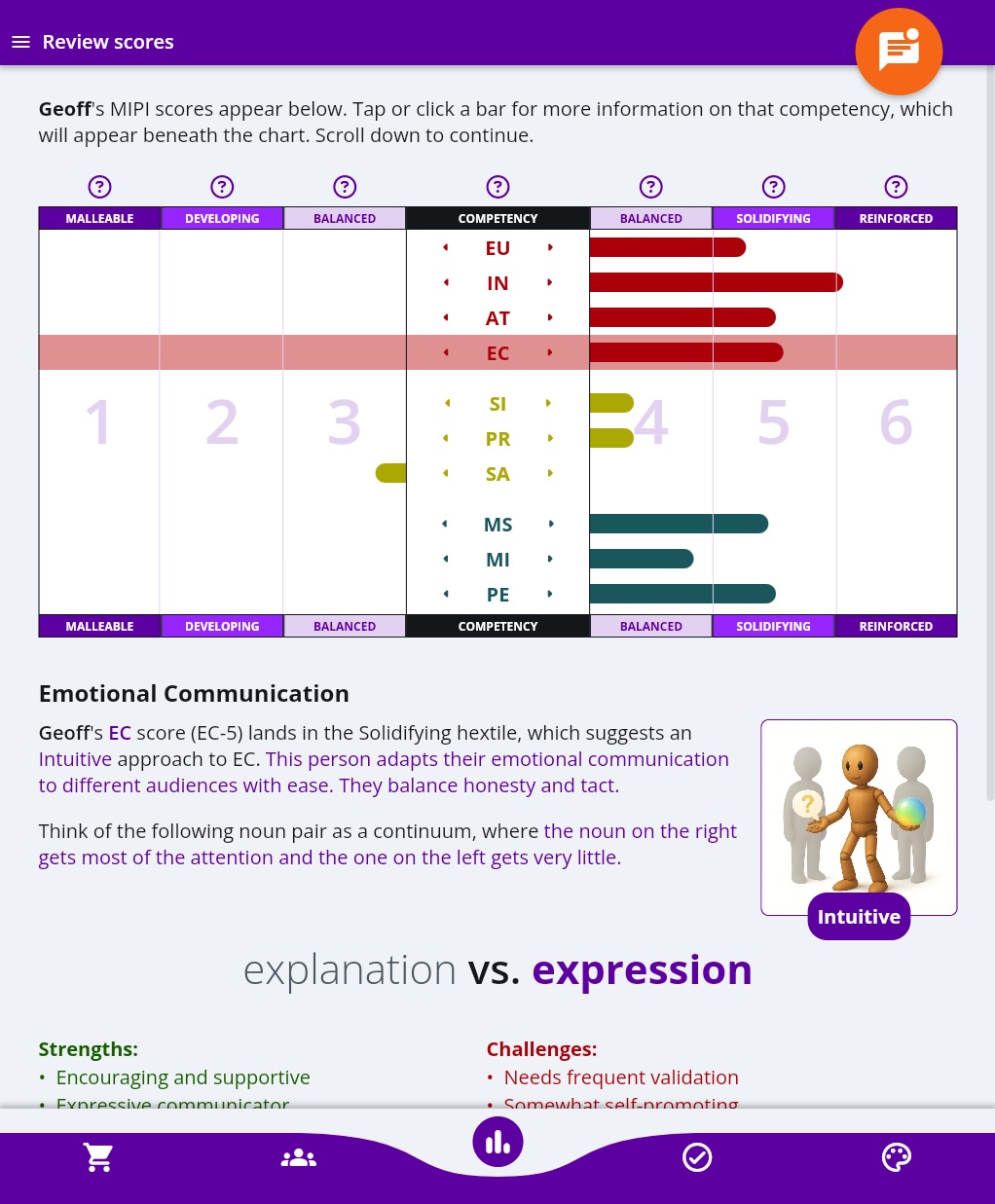
A hextile is one of six behavioural regimes used to describe how a competency may be expressed along its continuum.
In ordinary language, a hextile is not a score label so much as a patterned way a competency tends to show up. It helps describe the trade-offs, strengths and challenges associated with a given part of the continuum.
What A Hextile Does
- describes a characteristic expression of a competency
- shows likely strengths and likely challenges together
- frames variation as a trade-off, not a defect ladder
In Everyday Language
A hextile helps answer a question like: “If this part of a competency is more prominent, what does that usually make easier, and what does it tend to cost?”
That is why the framework uses six hextiles instead of treating people as simply low or high on a trait. The point is not just how much of something is present. The point is how it behaves in practice.
Each hextile is meant to capture a recognizable pattern, with its own kind of usefulness and its own kind of friction.
Why It Matters
The idea of a hextile matters because it keeps the framework from collapsing into “more is better” thinking.
Higher hextiles are not automatically superior. Lower hextiles are not automatically inferior. Each position brings different advantages and different constraints, and those matter differently depending on context.
What It Shapes
- how framework results are interpreted
- how strengths and challenges are described together
- how variation becomes legible without becoming moralized
Where to next