Introspectiveness
Introspectiveness is the capacity to examine your own motives, patterns, assumptions and inner logic with reflective depth.
In ordinary language, it is about how readily you turn inward to understand why you think, choose, avoid or repeat what you do. Some people reflect lightly and move on. Others regularly examine the deeper logic behind their reactions and patterns.
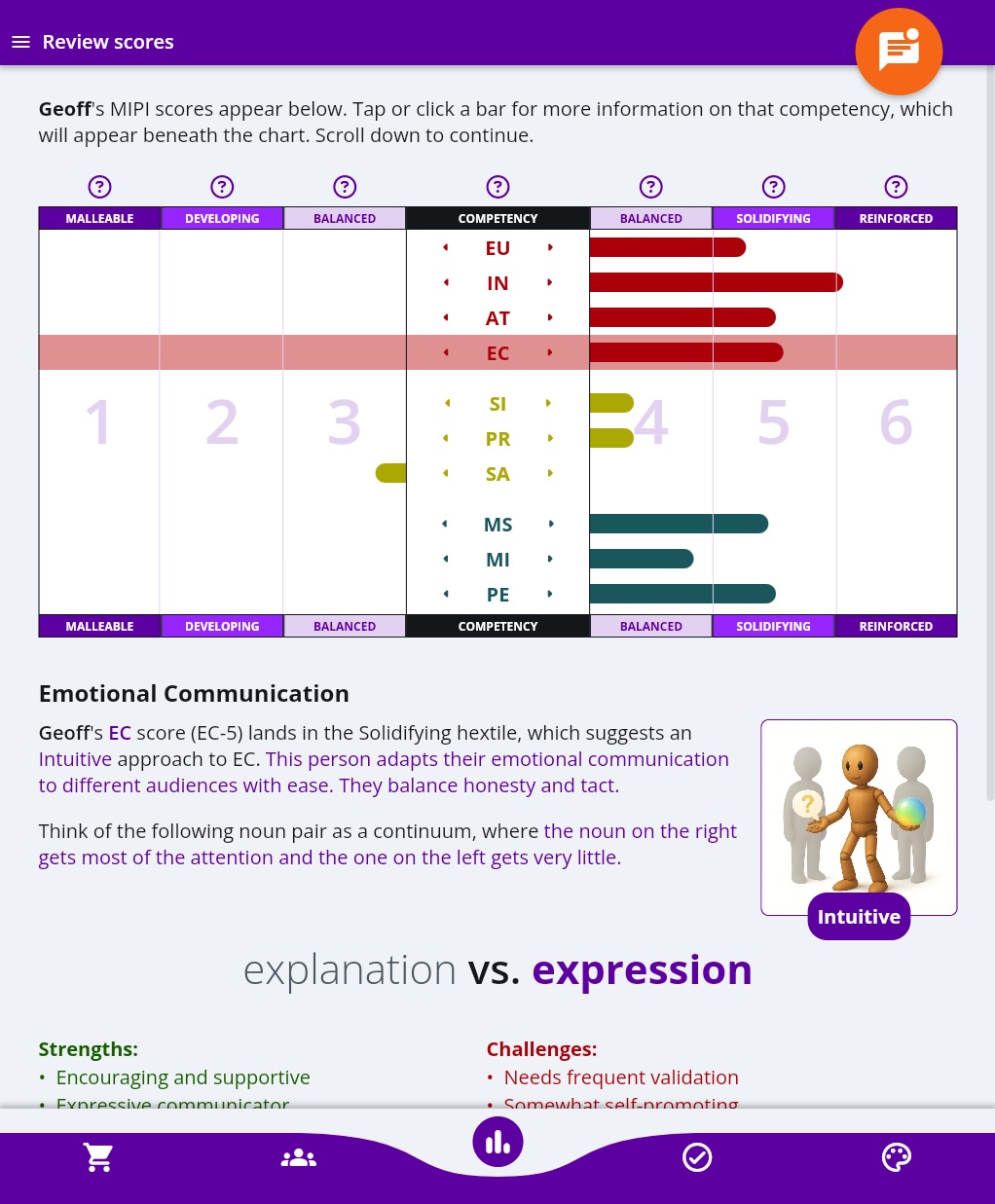
Continuum
Lighter inward reflection
Inner process may be examined briefly, intermittently or mainly after something has already gone wrong.
Strengths
- supports decisiveness
- reduces self-preoccupation
- can keep action moving
Challenges
- patterns may stay surface-level
- motives may go underexamined
- repeated logic may be missed
High inward reflection
Motives, assumptions and recurring meanings may be examined regularly and with substantial depth.
Strengths
- supports pattern recognition
- surfaces hidden assumptions
- can deepen self-knowledge
Challenges
- reflection can become circular
- insight may outrun action
- analysis can slow movement
The point of the continuum is not that one end is better. Each position carries trade-offs, and those trade-offs matter differently depending on context.
What It Shapes
- how readily you examine your own motives and patterns
- how much meaning you draw from inner experience
- how deeply you question your own assumptions
In Everyday Life
Introspectiveness affects whether your behaviour is understood mainly at the level of reaction, or also at the level of pattern and motive.
When it is more available, a person may be quicker to notice recurring themes, hidden assumptions or self-protective logic. They may be more likely to ask not just what happened, but why this pattern keeps happening.
When it is less available, behaviour may still make sense to the person, but mostly in immediate or practical terms. The deeper logic may remain implicit, which can make repeated patterns harder to revise.
What It Is Not
Introspectiveness is not the same as emotional sensitivity.
Someone can notice feelings accurately in the moment and still do relatively little reflection on the broader motives or meanings behind them. Someone else can reflect extensively on inner life while still misreading what they are feeling in real time.
Why It Matters
This competency helps describe how much a person turns inward to make sense of their own patterns, not simply whether they think a lot.
It is useful because it makes reflective depth legible without treating either action or inwardness as inherently superior.
Where to next