Interactive social simulation
Party Planner: Arrivals
Welcome a room full of very different guests and see how small choices at the door shape the whole atmosphere.
Social intuition
Party Planner: Arrivals
Act I is about arrivals, first impressions, and the small hosting moves that make people feel safe, seen, or overloaded.
Orientation
This lab puts you in the role of host during the first wave of arrivals.
Your job is not to be perfect. Your job is to notice what different guests quietly need as they enter the room.
In this act, good hosting choices often do one of these things:
- reduce self-consciousness,
- give someone a clear role,
- match the room to their energy, or
- protect the atmosphere from avoidable tension.
What to pay attention to: who relaxes, who stiffens, and what your choice teaches the rest of the room about what is safe here.
What this is not: a test of whether you are a good person or a perfect host. It is a way of noticing how different people arrive with different social needs.
The Party Planner
Act I · The Arrival · Keep the room soft, warm, and socially alive.
Small arrival choices teach the room what kind of place this is.
Inner Monologue
Room Pulse
Lessons from Act I: How People Arrive
What different guests quietly needed at the door.
Maren – Quiet Reader: opens up from a cosy, low-noise base camp.
Alex – Guarded Observer: warms slowly with low-stakes, low-pressure entry.
Clark, D. M., & Wells, A. (1995). A cognitive model of social phobia. In R. G. Heimberg, M. R. Liebowitz, F. L. Hope, & D. W. Bennett (Eds.), Social phobia: Diagnosis, assessment, and treatment (pp. 69–93). Guilford Press.
Zelenski, J. M., Sobocko, K., & Whelan, D. C. (2013). Introversion, solitude, and subjective well-being. In L. V. Lee (Ed.), Handbook of solitude: Psychological perspectives on social isolation, separateness, and being alone. Wiley-Blackwell.



Victor – Storyteller: shines with a willing audience and gentle boundaries.
Lucas, R. E., & Diener, E. (2001). Understanding extraverts' enjoyment of social situations: the importance of pleasantness. Journal of Personality and Social Psychology, 81(2), 343.
Smillie, L. D., Cooper, A. J., Wilt, J., & Revelle, W. (2012). Do extraverts get more bang for the buck? Refining the affective-reactivity hypothesis of extraversion. Journal of Personality and Social Psychology, 103(2), 306.

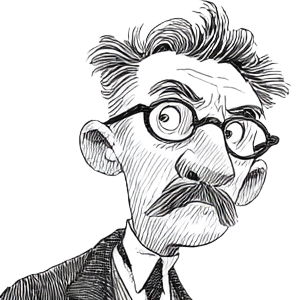
Jade – Social Helium: glows when you let her help other people land.
McNamara, L., & Ballard, M. E. (1999). Resting arousal, sensation seeking, and music preference. Genetic, Social, and General Psychology Monographs, 125(3), 229.
Zuckerman, M. (1990). The psychophysiology of sensation seeking. Journal of Personality, 58(1), 313-345.


Lia – Calm Center: regulates best when not loaded with everyone’s feelings too early.
Ren – Devoted Baker: needs their offering to be treated like a contribution, not clutter.
Mills, J., Clark, M. S., Ford, T. E., & Johnson, M. (2004). Measurement of communal strength. Personal Relationships, 11(2), 213-230.
Penner, L. A., Dovidio, J. F., Piliavin, J. A., & Schroeder, D. A. (2005). Prosocial behavior: Multilevel perspectives. Annual Review of Psychology, 56(1), 365-392.

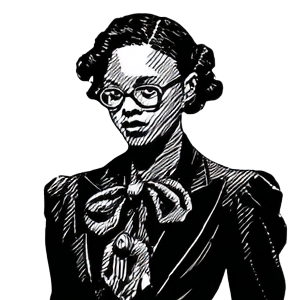
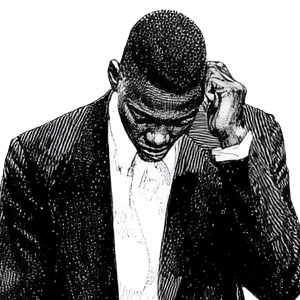
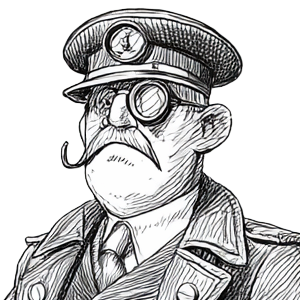
Hale – Admiral: prefers quiet incorporation over public jokes at his expense.
Dunkley, D. M., Zuroff, D. C., & Blankstein, K. R. (2003). Self-critical perfectionism and daily affect: dispositional and situational influences on stress and coping. Journal of Personality and Social Psychology, 84(1), 234.
Javaras, K. N., Schaefer, S. M., Van Reekum, C. M., Lapate, R. C., Greischar, L. L., Bachhuber, D. R., ... & Davidson, R. J. (2012). Conscientiousness predicts greater recovery from negative emotion. Emotion, 12(5), 875.

What you may have noticed
This exercise highlights how social environments are regulated through a series of small decisions. Good hosting is not just friendliness. It is the ability to notice what different nervous systems, personalities, and social styles need in order to arrive well. The strongest choices tend to create belonging without flattening people into one preferred way of being.How this works
This lab models the opening stretch of a social gathering, when the emotional climate of the room is still soft enough to be shaped by small choices. You play host as guests arrive one by one, each carrying a different social style, sensitivity, or need. The goal is not perfection. It is to notice how the atmosphere of a group is built through tiny acts of pacing, acknowledgment, placement, containment, and welcome.
What to notice as you use it
As you move through the arrivals, pay attention to the difference between helping one person land well and simply getting them through the door. Some choices look efficient on the surface but create subtle costs elsewhere in the room.
- Notice how atmosphere and tension shift together but not always in the same direction.
- Notice which guests need soft entry, which need channeling, and which need gentle boundaries.
- Notice the ripple effects, especially when one person’s arrival changes how already-present guests feel about the room.
Why the experience is designed this way
The app is structured as a sequence of arrivals because social regulation often happens before the main event even begins. A party, meeting, dinner, or gathering can become easier or harder long before conflict appears openly. The arrival phase is where many of the room’s unspoken rules get established.
The comfort meters, atmosphere meter, and tension meter are there to make hidden hosting dynamics more visible. In real life, hosts often feel only a vague sense that the room is “working” or “off.” This lab breaks that intuition into pieces so you can see that one choice may soothe one guest, energize another, and unsettle a third.
The “Meanwhile…” ripple notes are especially important. They are there to show that hosting is relational and systemic. People are rarely reacting only to what happens to them directly. They are also watching what happens to others and quietly updating their sense of what kind of room this is.
The lessons screen at the end turns the scenario into a more explicit pattern-reading exercise. It helps connect the specific choices you made in Act I to broader principles about how different nervous systems and personality styles often arrive into social space.
The science or theory behind it
This lab draws on a mix of ideas from personality psychology, social regulation, affective style, and interpersonal sensitivity. Different people do not enter a room with the same threshold for stimulation, the same need for acknowledgment, or the same relationship to novelty, evaluation, warmth, and structure. A good host often senses those differences intuitively, but the app tries to make them more explicit.
The scenario also reflects the idea that social comfort is co-regulated. A room does not become warm, tense, safe, or brittle all at once. It emerges from repeated signals about belonging, status, pressure, pace, and permission. A guest who watches someone else be mocked, ignored, overused, or overexposed may change their own behavior long before anything happens to them directly.
The lesson cards extend that logic by linking the fictional guests to broader patterns: social anxiety, introversion, reward sensitivity, sensation seeking, caregiving orientation, and conscientious structure-seeking. The point is not to reduce people to traits. It is to show that different people often need different forms of landing in order to feel socially available.
Limits of the model
This is a stylized hosting simulation, not a universal theory of personality or a complete map of social life. Real gatherings involve history, culture, context, power, mood, relationship history, and many forms of unpredictability that no short lab can fully represent. The characters are intentionally legible and somewhat exaggerated so the underlying dynamics are easier to notice.
If you want to go further
After you finish, think about which guest types you instinctively know how to welcome and which ones are harder for you to place well. Hosts often have a social “home language,” and the most useful learning usually begins where another person’s needs fall just outside it.