Meaningful Connections Case Study (2018)
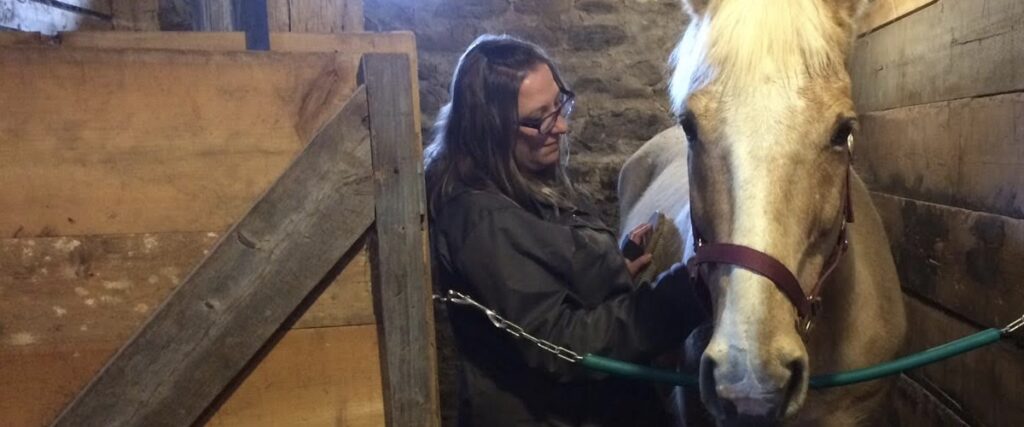
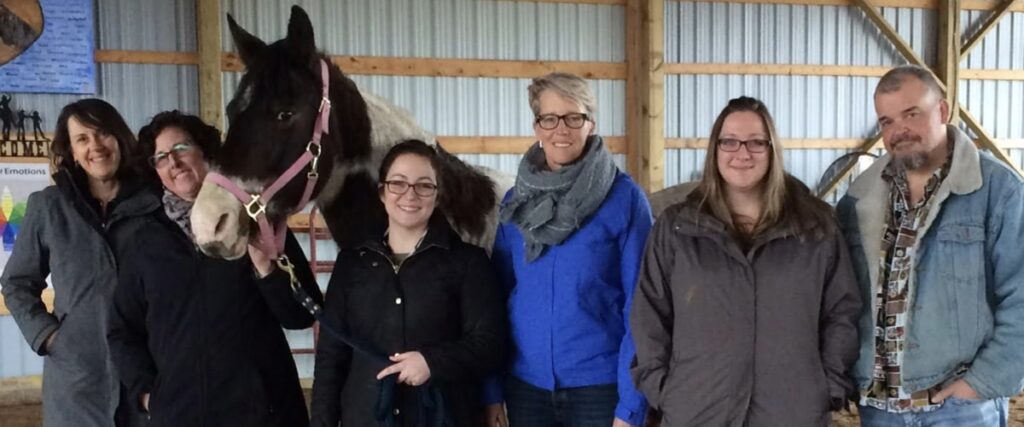
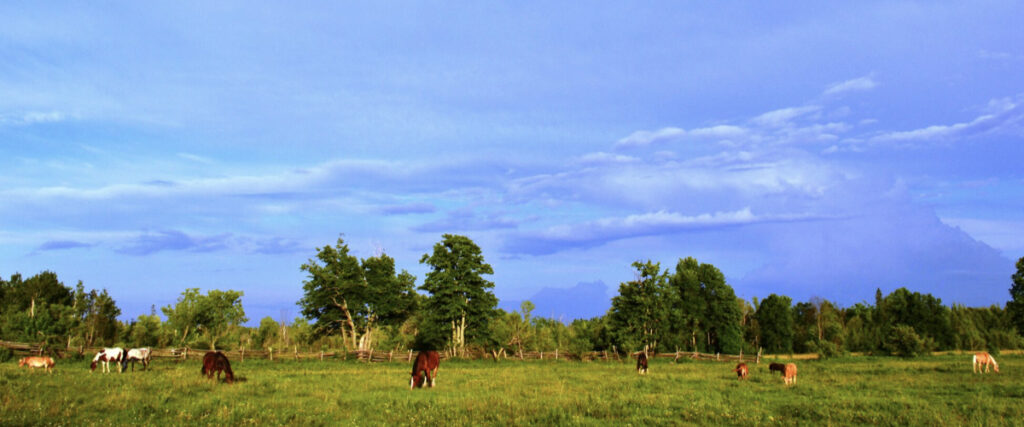
In 2018, Adaptimist Insights partnered with The Mane Intent to design and deliver a two-day leadership retreat in Indian River, Ontario. The setting was unusual, but the objective was not: help leaders see, in real time, how their internal state affects the people around them.
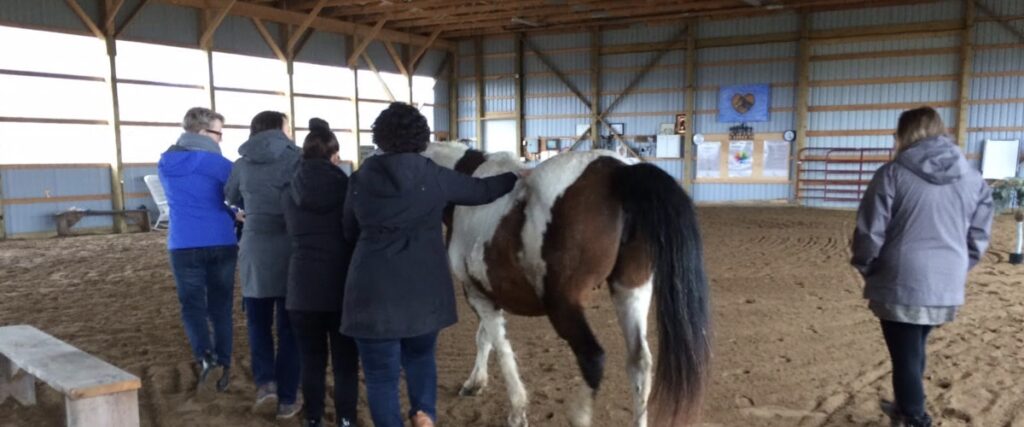
Working on the ground with horses, participants encountered a form of feedback that most workplaces rarely provide. Horses do not respond to titles, explanations, or polished intent. They respond to presence, clarity, tension, hesitation, and emotional congruence. If a participant was unclear, the horse did not follow. If they were unsettled, the horse resisted. If they became grounded and deliberate, the interaction changed.
That made Meaningful Connections more than a memorable retreat. It became a structured leadership intervention built to make behaviour visible quickly enough that people could actually work with it.
Read Global News’ coverage: Peterborough-area farm’s program uses horses to teach leadership skills (April 13, 2018).
The Problem
Most leadership development happens too far downstream. By the time feedback reaches someone, it is often delayed, softened by politics, or buried under explanation. People are told what to improve, but they do not always get to see what they are actually doing in the moment.
Meaningful Connections was designed to change the feedback conditions. It created an environment where internal states became externally visible, behaviour was reflected back immediately, and adjustment could happen on the spot rather than in retrospect.
People cannot change what they cannot see.
Meaningful Connections was designed to change the feedback conditions. It created an environment where internal states became externally visible, behaviour was reflected back immediately, and adjustment could happen on the spot rather than in retrospect.
How The Retreat Worked
This was not an open-ended wellness retreat. It was a deliberately structured two-day program for leaders, managers, and business owners working in environments where clarity, emotional steadiness, and interpersonal skill mattered.
Across the retreat, participants moved through a repeating cycle of experience, reflection, concept, and re-application. Horse-based work was paired with practical instruction and guided reflection so that participants were not simply having powerful moments. They were learning how to interpret those moments and use them.
- Body-based awareness and grounding
- Emotion fundamentals and emotional regulation
- Reflective listening and interpersonal communication
- Facial expressions, non-verbal cues, and social interpretation
- Automatic thoughts, invalidation, and assertiveness
- Self-compassion, perspective-taking, and structured reflection
The design gave participants both sides of the developmental equation: immediate behavioural feedback in the arena, and practical tools for making sense of what that feedback revealed.
What Participants Were Learning
The retreat surfaced the same kinds of challenges leaders face in teams, negotiations, and change efforts every day. What happens when resistance shows up? Does clarity improve or collapse? Does pressure lead to over-control, withdrawal, mixed signals, or loss of presence?
Meaningful Connections was designed to help participants build capacities that are often praised but much harder to develop in practice:
- Self-awareness under pressure
- Emotional regulation in real time
- Clearer signalling and stronger boundaries
- Better sensitivity to non-verbal feedback
- Influence rooted in congruence rather than force
- Trust-building through steadiness and clarity
A Concrete Example
One participant described being asked to guide a horse through an obstacle task with no prior training. At first, the instinct was to compensate with effort. The more pressure she applied, the more resistance she met. The turning point came only after she paused, breathed, and became more deliberate in her presence.
What changed was not technique. It was belief, clarity, and presence.
That was one of the retreat’s core insights. Leaders often try to solve relational problems by adding more effort, more explanation, or more control. Often the deeper issue is that the signal they are sending is confused, tense, or internally split.
Why It Worked
The value of the horses was not novelty. It was feedback speed. In ordinary professional life, behavioural patterns can stay hidden for months because the environment is buffered by hierarchy, language, and delay. In the arena, those buffers fell away. Patterns became visible quickly, and once visible, they became workable.
When feedback is immediate and unfiltered, behavioural patterns become visible within minutes.
That is what made the program memorable. Participants were not being told who they were. They were being placed in a setting where they could observe themselves more clearly than most workplaces allow.
The Partnership
Meaningful Connections brought together two complementary forms of expertise. Jennifer Garland and The Mane Intent created the equine-based environment and facilitation context. Geoff Crane and Adaptimist Insights brought the psychological models, leadership framing, and structured learning design. Together, the partnership made it possible to deliver something more rigorous than a retreat experience alone: a practical development program grounded in live feedback and supported by real instructional architecture.
What It Demonstrated
Meaningful Connections showed that leadership development becomes much more powerful when people do not have to guess what their behaviour is doing. When the feedback loop shortens, confusion becomes visible. Over-control becomes visible. Hesitation becomes visible. Grounded presence becomes visible too.
Although this was an earlier program, it captures an important thread that still runs through Adaptimist’s work now: meaningful change becomes more likely when hidden processes are made visible, and when people are given both the experience and the tools to work with what they find.
Where to next