
Glossary

  • Attentiveness

    Framework term Attentiveness is the capacity to notice relevant cues, stay mentally oriented and keep track of what matters in the moment. In ordinary language, it is about how steadily your attention stays with what is actually happening. Some people track context, detail and shifts in relevance quite readily. Others orient more loosely, act faster…
  • Introspectiveness

    Framework term Introspectiveness is the capacity to examine your own motives, patterns, assumptions and inner logic with reflective depth. In ordinary language, it is about how readily you turn inward to understand why you think, choose, avoid or repeat what you do. Some people reflect lightly and move on. Others regularly examine the deeper logic…

  • Emotional Understanding

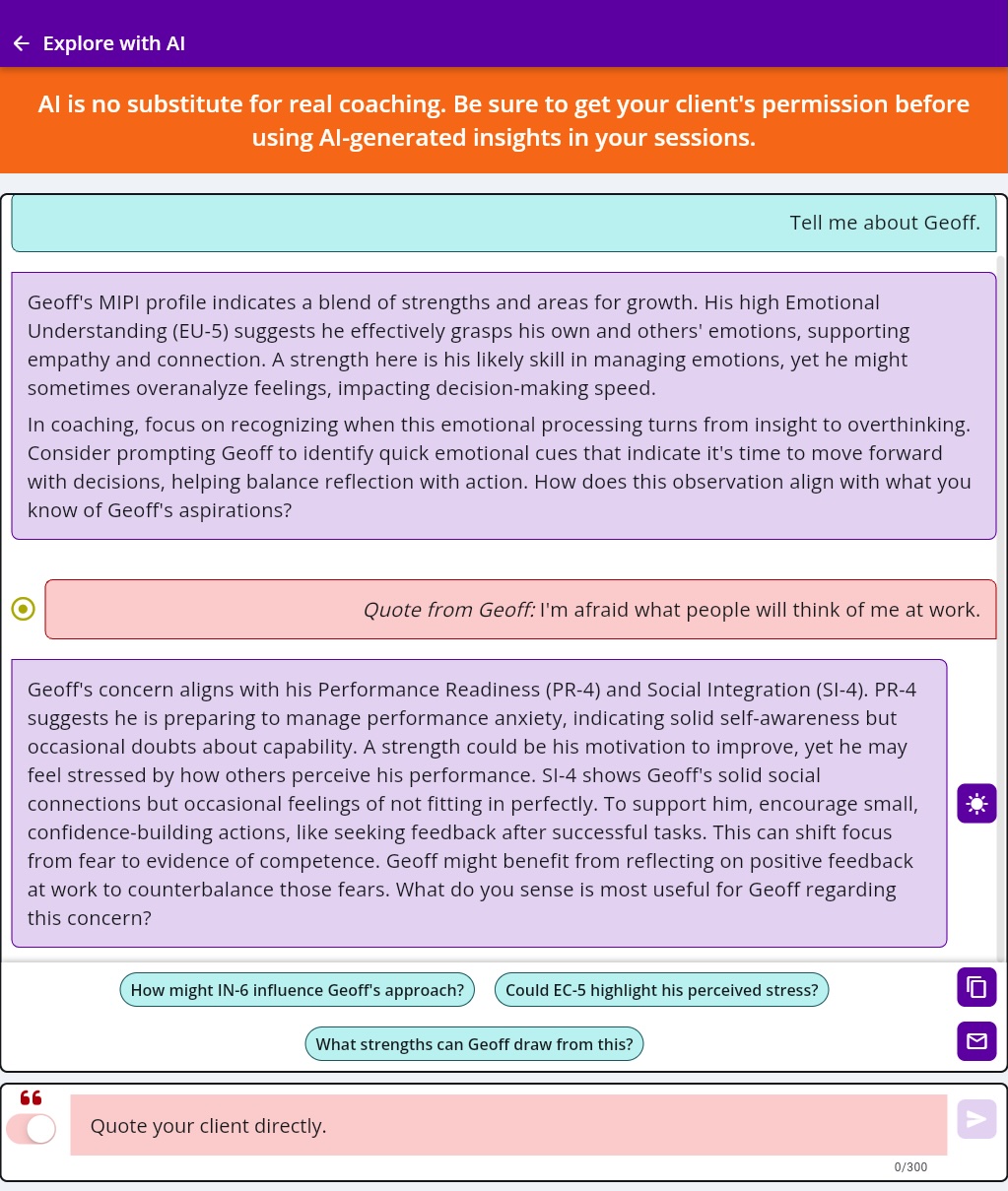
    Framework term Emotional Understanding is the capacity to notice, recognize and make sense of your own emotional states. In ordinary language, it is about how clearly you can tell what you are feeling. Some people notice emotional shifts quickly and sort them fairly well. Others notice them later, more vaguely, or only once the feeling…

  • Identity Pressure

    Identity pressure is what happens when being seen as who you are starts feeling costly, constrained, or socially loaded. Sometimes that pressure comes from explicit bias or exclusion. Sometimes it comes from subtler cues: being the only one like you in a room, feeling watched, anticipating stereotype, sensing that one version of yourself will be…

  • Boundaries

    Boundaries are the limits that protect what you can reasonably carry, allow, or make available. They are not just rules you impose on other people. Boundaries are also about what you treat as yours to manage, what you do not consent to take on and where you stop letting another person’s urgency, entitlement, or confusion…

  • Audience

    Audience is the person, group, or imagined watcher you are responding to when you speak, act, reveal, or hold back. That may sound obvious, but audience changes a lot. People do not behave the same way in private, with a friend, in front of a crowd, under evaluation, or in a room where they feel…

  • Expression

    Expression is how something happening inside you becomes visible, audible, or otherwise available to other people. That can happen through words, tone of voice, face, posture, pacing, silence, or behavior. Expression is not just about “saying how you feel.” It is about how inner experience gets translated into something other people can notice. That matters…

  • Readiness

    Readiness is the condition of being able to meet a demand well enough when it arrives. That sounds obvious, but people often confuse readiness with confidence, motivation or performance itself. They are related, but they are not the same. You can feel confident and still not be ready. You can be ready and still feel…

  • Friction

    Friction is whatever makes movement harder than it looks from the outside. Sometimes that friction is practical: too many steps, too much ambiguity, too many decisions. Sometimes it is emotional: dread, exposure, shame, resentment, overwhelm. Often it is both. The point is not just that something is hard. It is that there is resistance in…

  • Clarity

    Clarity is what it feels like when something inside you becomes easier to see, name, or work with. That does not always mean certainty. Clarity is not the same as having a perfect answer. It is often much smaller than that. Sometimes clarity just means that what felt muddy now has edges. You can tell…